It’s me, back again. Apologies it’s been a while but like many others the last few months have been manic; it’s been sad, it’s been ambiguous, it’s been interesting. For all of those who read this who are involved in organisational development, effectiveness, team dynamics etc, of which I imagine there is a high proportion, we’re in an unprecedented time of change and experimentation in working paradigms. One that many, including myself, feel has opened pandora’s box and whether that is a positive or not is to be seen.
I would like to take a moment before I dive in to acknowledge the human cost, in my industry we often focus on economics and the financial cost, as would be expected, but all over the world people are losing their lives, losing loved ones, losing their jobs, losing their companies, being put under immense pressure and where this ends no one knows but I believe in the human spirit and believe we will come through this battered but standing and hopefully long term in a better place.
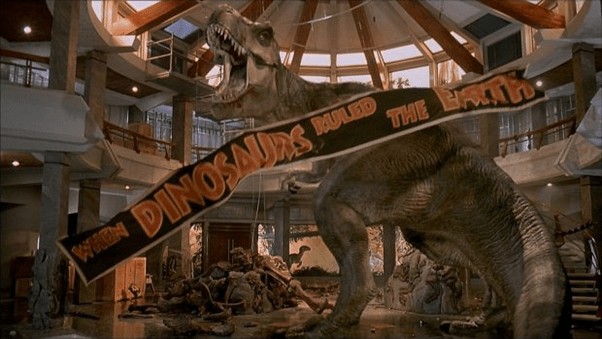
So as my slightly controversial title and picture comparison has already primed you, I want to explore the role of the senior executive within medium and large companies, now and in the future. From what I see, hear and read from an organisational perspective it could be those senior leaders who are feeling the pressure and struggling most with this new world. Not from a workload perspective, although no doubt some are being forced to make decisions that trouble them deeply, but from a connective perspective.
I’ve seen a wide range of executives that operate in a variety of different ways. There are more lengthy, detailed, knowledgeable research than I can offer here on the nuances of it but what the successful ones all seem to do is connect and engage with individuals from around the organisation. They keep their ear to the ground and use the anecdotal evidence to draw conclusions about what’s actually going on. For years this style has bothered me in the lack of scientific rigour from a sampling point of view, both in the small size but also the bias of the sample itself. However, I think many of the executives are now struggling, they are unable to do that in this remote environment. This has left them feeling adrift of the situation in areas under their control (more on control later) unable to sense the temperature and feeling insecure. If we’re to take that one step further and fall back on Jon Ronson’s work on the prevalence on sociopaths at the top of companies, senior executives now have a gaping hole where once their ego was fed by sycophantic employees looking to boost their careers through a senior relationship. This vacuum exposes some of the insecurities not just in the individuals but in the whole concept of leadership in a business environment.
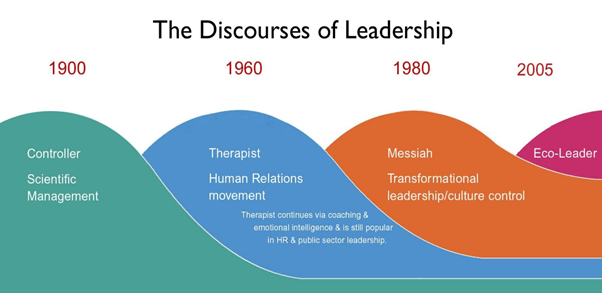
This leads me neatly on to the next area around leadership itself. This crisis has put the breaks on and hopefully ended some of the return to the messianic leadership discourse that I believe has been making a comeback. Just look at Trump and Boris and you can see people looking for “strong” leaders who will “save them”. While the graph shows it was a receding trend, recent years have shown it to be making a comeback look at Elon Musk at Tesla, Nikolay Storonsky at Revolut etc.
I believe these leaders have played on two basic human needs, the need for protection and the desire to know that we or someone else is in control.
My hope for this crisis in leadership terms is that this shatters the illusion that leaders were ever in control. I would like to see the Eco-Leader, who focuses on connectivity & ethics, continue to rise.
I do, however, think some out there will continue to support the senior executive, acknowledging that they may not be in control of business processes but are there are as a people leader and motivator to ‘fire up the troops’. While this is certainly the case, I think many senior executives are poor at this. They simply cannot be embedded enough in the teams in their area to understand the team dynamics at play, Jon Ronson would argue they would lack the empathy to see it even if they were. Senior executives are often woefully underinformed on the performance of an individual. All they will see are the results and the visibility of the individual and then naturally extrapolate assumptions based upon that. While both of these seem sensible from the outside they’re poor proxies and potentially damaging to the organisation. Firstly, results would seem like a reasonable thing to judge people on but taken on their own can be a false indicator, to quote Daniel Kahneman about how we underestimate the role of luck in our careers; “luck plays a large role in every story of success; it is almost always easy to identify a small change in the story that would have turned a remarkable achievement into a mediocre outcome.” Secondly, visibility links strongly to both presenteeism and extraversion, to focus on these traits would firstly be to the detriment of diversity within an organisation but secondly to perpetuate the ‘face time’ requirement that many organisations have but this crisis gives us a chance to finally change. I remember an example of a board meeting where one of the board members congratulated an invitee for having sent through their board paper at 2am that morning, the board member not hiding as well as they thought the messaging that this was something to be admired.
The other major role of the senior executive can be under threat as well; setting the strategy. We’ve seen a trend where functional teams retreat within themselves during this period. They focus inward on each and getting the job done. The knock on effect of this is lower cross functional collaboration, a lack of understanding the context and therefore poorer business outcomes overall. Herein again, the effective senior executive who believes leadership is in service of the people rather than in control of the people will perform admirably, taking a facilitator/integrator role and matchmaking people ensuring the dissemination of ideas and information as well as the encouragement of collaboration. However, we know the archetypical leader within our businesses,

politics and sports do not possess this sort of humility and instead being driven by ravenous egos that want to be deferred to rather to be in support of. As a couple of my favourite psychologists (Amy Edmondson and Tomas Chamorro-Premuzic) said “If the pandemic offered one big lesson, it’s that people are clearly better off when their leaders are rational, honest, and empathetic. Although this shouldn’t come as a surprise, the unfortunate reality is that most leaders don’t actually fit this profile. It took a global crisis to reveal the problem with macho leadership, so often worshiped as heroic even in Hollywood movies.”
What’s been demonstrated by many senior leaders across society is an underlying lack of trust in those beneath them. It will differ from individual to individual, it may be trust in competence, it may be trust in work ethic or communication. But whatever it is, it seems to present in the same way that senior executives limit the freedom or autonomy of those in their organisations who are closer to the situation, better informed and probably more specialised to make the decisions unsupervised. Ironically repeated scientific experiments have shown the opposite, particularly in highly complex, high cognitive load industries like professional services. Giving people autonomy and freedom increases their motivation and engagement resulting in higher performance, not in ‘goofing off’ and trying to get away with the bare minimum.
So what’s the conclusion on this all. I guess there are two coming out, firstly the role of the senior executive has changed, they should no longer be the command centre of an organisation, they need to focus on being the connectivity that keeps and organisation aligned. Secondly they need to get comfortable with embracing a lack of control, trusting the people that they have hired to do the role and being comfortable with not knowing things but rather knowing where to go to find out. In conclusion to misquote the Laura Dern to the great Richard Attenborough ‘the illusion was that they ever had control in the first place’.
 People Matter(s)